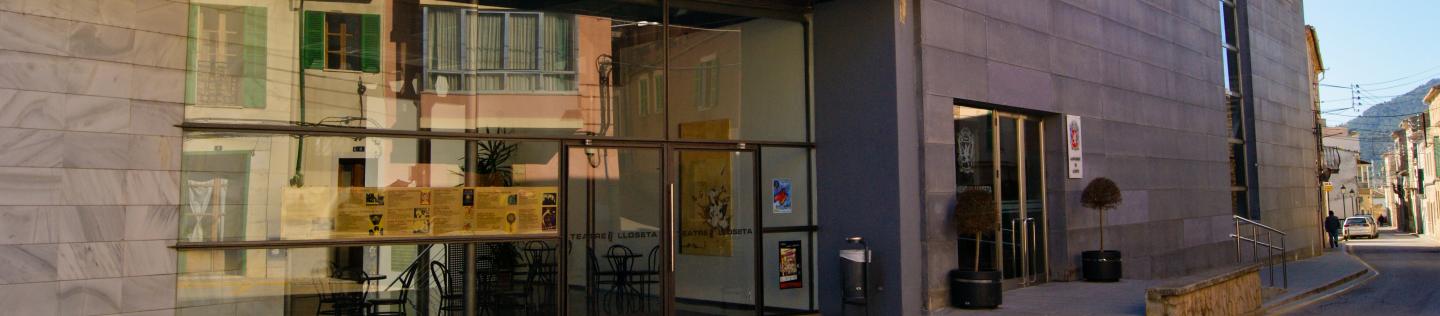

| A walk around the town centre |
The Chapel of el Cocó is located in the old estate of Son Ramon, a place name which appears in the 17th century. It was previously part of the estate of Aiamans and it was later divided into Son Ramon and Son Pelai.
|
In the mid 17th century, the estate was owned by doctor Jaume Fàbregues, secretary of the Holy Office of Palma de Mallorca. At the beginning of the 19th century, the estate was bought by the Alcover family. A descendant of the family, Mateu Alcover Bennàssar, stipulated in his will that the nine “quarterades” of olive grove bearing the name of el Cocó were to be devoted by notarial deed to the construction of the chapel in 1878. The value of the land was 25 pesetas.
|
 |
The Count of Aiamans, as master of the Church of Lloseta, not only took part in the building of the chapel but also contributed the total amount of 25,000 pesetas.
The vicar of Lloseta Miquel Arbona Mayol, from Sóller, oversaw the process of construction. On 20 November 1876 he made a request for the construction of the chapel to Mateu Jaume Garau, bishop of Mallorca, with the aim of promoting the worship of the Mare de Déu de Lloseta. The bishop gave his approval and the works began in 1877 under the direction of Jaume Rosselló Homar. The construction began in the summer of 1877 and ended in June 1878, even though the chapel was blessed in April. |
 |
The chapel preserves distinct traditions such as the pilgrimage of el Cocó, “gloses” (traditional rhyming) and traditional songs.
The chapel has a small nave measuring nine metres by four metres and a groin vault and an altarpiece holding the figure of the Mare de Déu. The sacristy is situated at the back.
 |
The building was restored in 1978, the year of its 100th anniversary. The old sculpture was withdrawn in 1974 and nowadays it is preserved in the sacristy of the parish church. The new sculpture was created by the sculptor Francesc Salva and it is a copy of the original one. In 1974-1975, on which Andreu Llabrés Feliu was rector of Lloseta, the altarpiece was painted sand colour, the roof was completely replaced, a new stone floor was laid in the chapel and the vault was stripped to lay bare the original sandstone. The yard was enlarged. In 1988 it was declared a building of cultural interest. |
The Parish church is located in the centre of Lloseta. It is the third church of the municipality. Construction began in 1844 and ended eight year later in 1862. The last restoration of the building took place in 1995. The church was attached to the existent building using barrel vaults, cornice and stone columns in neo-Classical style.
|